

You should know more about Agile Testing…
Do you find that your IT and software projects leave significant room for improvement, despite your best intentions and high quality standards? Do you find yourself in a sea of requirements, release dates, feature and change requests?
Discover now why Agile Testing is not just a buzzword, but the key to higher quality software and faster time to market. Learn how this method can revolutionize your software project and save it from failure.
Imagine a world where your software teams work more efficiently, collaborate more closely with customers, and deliver high-quality digital services that truly meet customer needs. With Agile testing, this is not only possible, but also much easier than you think.
Read on now to learn how Agile Testing is guaranteed to make the future of your business more successful. Get agile testing principles, test methods and best practices you should know now!
Why is agile testing essential?
Imagine investing months in the development of a software, only to find out in the end that it doesn’t meet the users’ requirements. Agile testing will prevent exactly this scenario. It ensures that you are not only developing quickly, but also in the right direction. It is an approach that allows you to continuously adapt to the ever-changing needs of customers.
The principles and benefits of agile testing
Traditional testing methods often focus on detailed test cases and extensive documentation. In contrast, agile testing focuses on continuous learning, adaptability, and feedback loops. This paradigm enables much closer collaboration between developers, testers, and stakeholders, which significantly increases efficiency.
Other benefits include:
- Faster time to market: short development cycles and continuous feedback allow products to be brought to market faster.
- Higher quality: Since testing takes place at the same time as development, errors are detected and corrected at an early stage.
- Customer focus: Since requirements can change during the course of a project, the agile methodology enables rapid adaptation to new customer needs.
Roles and best practices in agile test teams
In an agile team, different professionals work closely together, from developers to product managers to industry experts. This interdisciplinary approach fosters a tight-knit communication structure that drives development. The following best practices make this method particularly effective:
- Agile Mindset: a supportive and collaborative company culture is critical to success.
- Knowledge Sharing: share foundational knowledge and skills within the team to respond more quickly to challenges.
- Exploratory testing and automation: These combined methods enable thorough software testing and rapid adaptation.
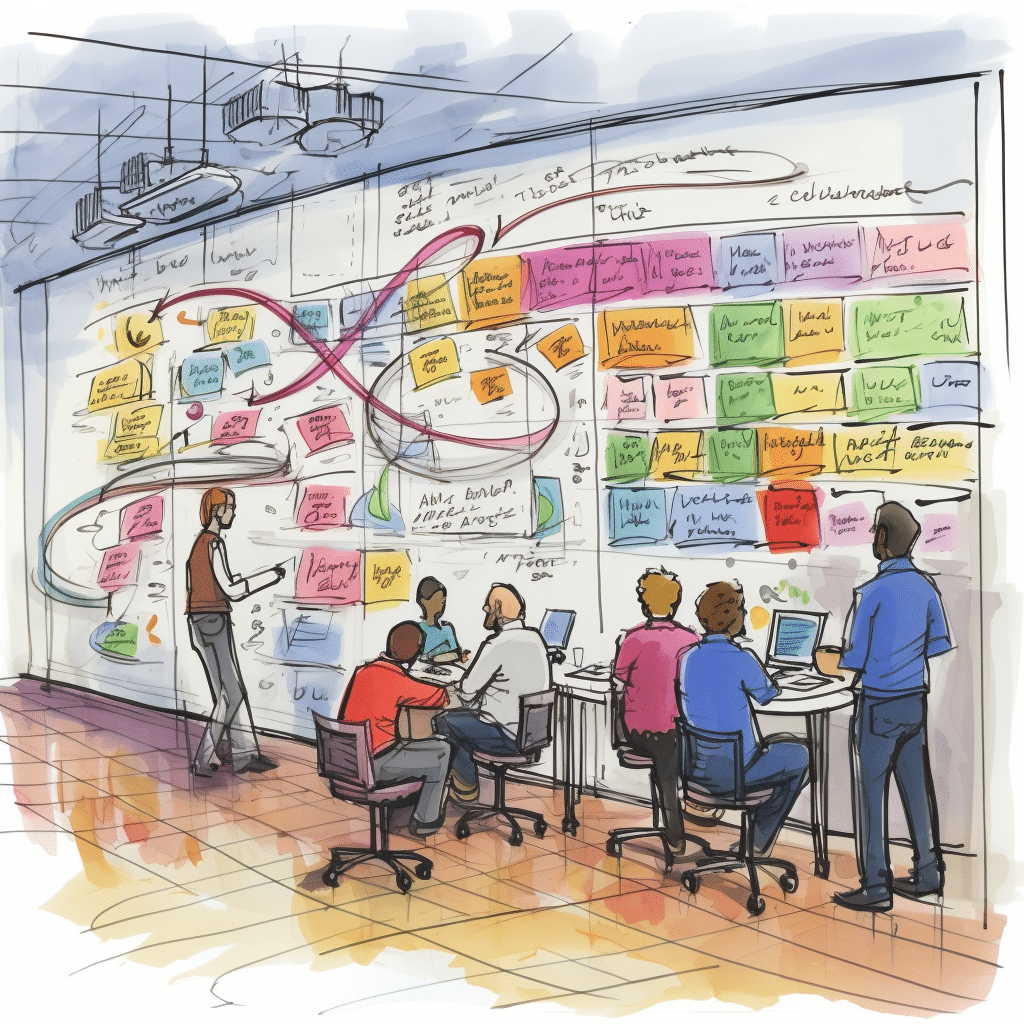
Agile Testing in Teams – Test management across departments and company borders!
What should you do next?
Agile testing is more than just a methodology; it’s a fundamental approach to modern software development projects. If you want to optimize the development process with your team and create a product that truly meets the needs of your customers, then it’s time to transition to agile testing methods.
- Evaluate your current testing strategy: Review whether your current methods provide you with the flexibility and adaptability you need for rapid release intervals and features towards users.
- Build an interdisciplinary team: Make sure that all required skills are represented in the team.
- Use agile testing tools: Use software specifically designed for agile testing to automate and streamline the process. To what extent have you already established unit testing and advanced testing methodologies? Not at all yet? Then it’s time…
Agile testing is the key to developing software that is not only functional, but also adapted to the needs of the end user. It’s time to integrate this powerful approach into your software development in a practical way.
🎙️ New Rock the Prototype Podcast Episode 🎙️
“Agile Testing — Podcast Interview with Lisi Hocke”
🌟 Special guest: Lisi Hocke, expert with about 15 years of experience in Agile and software quality. 🌟
📌 Why should you listen in?
- Profound insights: Lisi Hocke shares her in-depth experience and explains why Agile testing is essential in modern software development.
- Practical tips: Learn the principles underlying Agile testing and how to apply them to your projects.
- Cross-industry expertise: Learn how Agile testing can add significant value even in regulated industries such as healthcare.
🎧 Available now on your favorite podcast platform. Don’t miss this once-in-a-lifetime opportunity! 🎧
🎧 Listen on Spotify: 👉 https://spoti.fi/3P7yZKV
🍎 Enjoy on Apple Podcasts: 👉 https://apple.co/3P73X5P
https://open.spotify.com/episode/3WFLt1H84vI0l3yRXPjvtG
Practical tips & recommendations for digital transformation
If you are looking for a practical methodology based on real project experience, you will find a guide to implementing digital transformation in your company in the reference book on digital transformation “Large-Scale Agile Frameworks — Agile Frameworks, Agile Infrastructure and Pragmatic Solutions for Digital Transformation”.
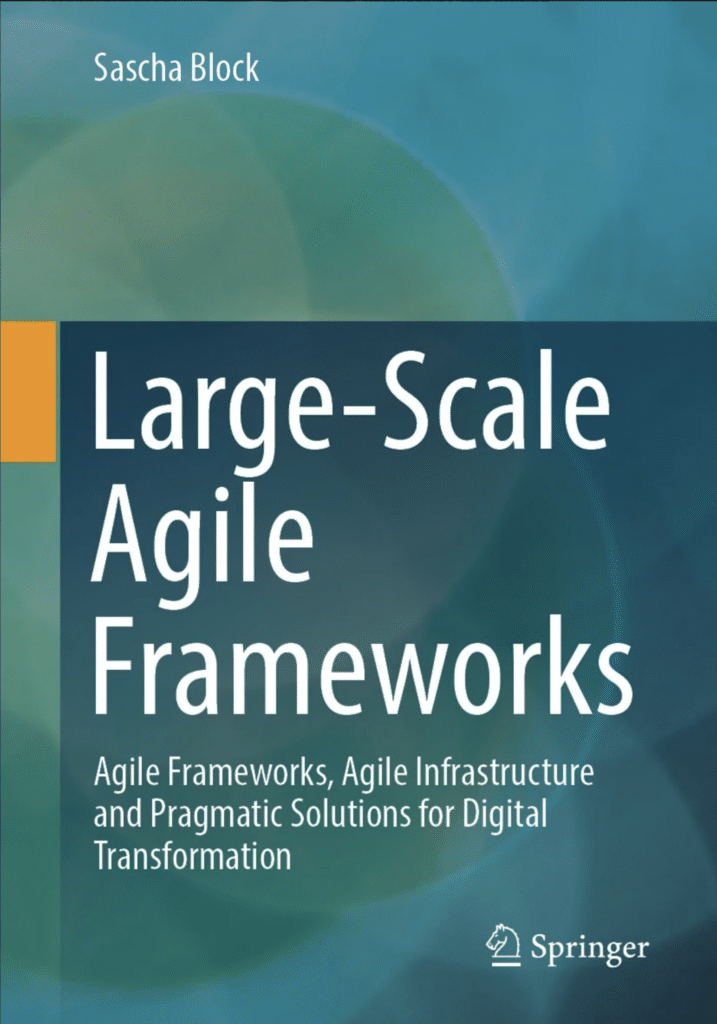
Directly usable recommendations, practical and easy to understand
Digital Transformation with Large-Scale Agile Frameworks is a set of practical process models and directly usable recommendations based on real project experience from countless IT projects.
The typical problems that project participants and stakeholders are confronted with during digital transformation are reflected upon and pragmatic solution approaches are presented. Agile prioritization is regularly a challenge for all participants.
You will learn how to define clearly defined goals for the digital transformation of your organization and thus actively shape the change to agile ways of working. The importance of agile processes and the large-scale agile frameworks are presented in detail step by step.
All relevant agile concepts and basic terms are explained. With the method of Action Design Research a modern approach for practice-oriented problem solving in organizations is available.
I am Sascha Block — IT architect in Hamburg, author of the reference book Large-Scale Agile Frameworks and managing partner of INZTITUT GmbH and the initiator of Rock the Prototype. I want to make prototyping learnable and experienceable. With the motivation to prototype ideas and share knowledge around software prototyping, software architecture and programming, I created the format and the open source initiative Rock the Prototype with the podcast and our YouTube Chanel as free digital companion formats.
Find my podcast here at 🍎 Apple Podcasts: 👉 apple.co/3CpdfTs and at 🎧 Spotify Podcast: 👉 spoti.fi/3NJwdLJ. Also follow me on Linkedin: 👉 https://bit.ly/44xBIBJ
About the Author:

Sascha Block
I am Sascha Block – IT architect in Hamburg and the initiator of Rock the Prototype. I want to make prototyping learnable and experiential. With the motivation to prototype ideas and share knowledge around software prototyping, software architecture and programming, I created the format and the open source initiative Rock the Prototype.


Leave A Comment