
What is bootstrapping?
Bootstrapping is the technical way in which a software stack is defined, i.e. how an application is configured and started. Bootstrapping is therefore a typical deployment process.
Making software usable with bootstrapping
When software developers or a software development team or even a DevOps team talk about bootstrapping software, they mean that a defined collection of software tools is set up for an operating environment so that this software can be used directly.
Bootstrapping can be performed for a local development environment or a shared development environment or sometimes directly for the production environment.
In any case, the defined software environment can then be used automatically in an intended basic configuration.
With Bootstrap, the idea for simple deployment was born
Bootstrap
has provided the basic idea for simple deployment as a powerful front-end toolkit with many functions.
With the bootstrap method, software developers can quickly create everything from
prototype
to production – in just a few minutes to create a
web application
to realize a web application.
What is the purpose of bootstrapping software?
A bootstrap framework usually offers a collection of software and software libraries as well as global styles and settings. Bootstrap frameworks thus implement a kind of normalization, so to speak, which ensures that, for example, a consistent software configuration is always guaranteed.
The aim of this approach to software deployment is to ensure, for example, that applications work across all browsers with a basic configuration of this kind.
Bootstrapping in software development: A guide for software developers, DevOps teams and IT professionals
Bootstrapping in software development refers to the process of initializing and configuring software applications. It is a fundamental concept that plays a crucial role, especially in agile and DevOps environments. The focus here is on automating and simplifying development and deployment processes.

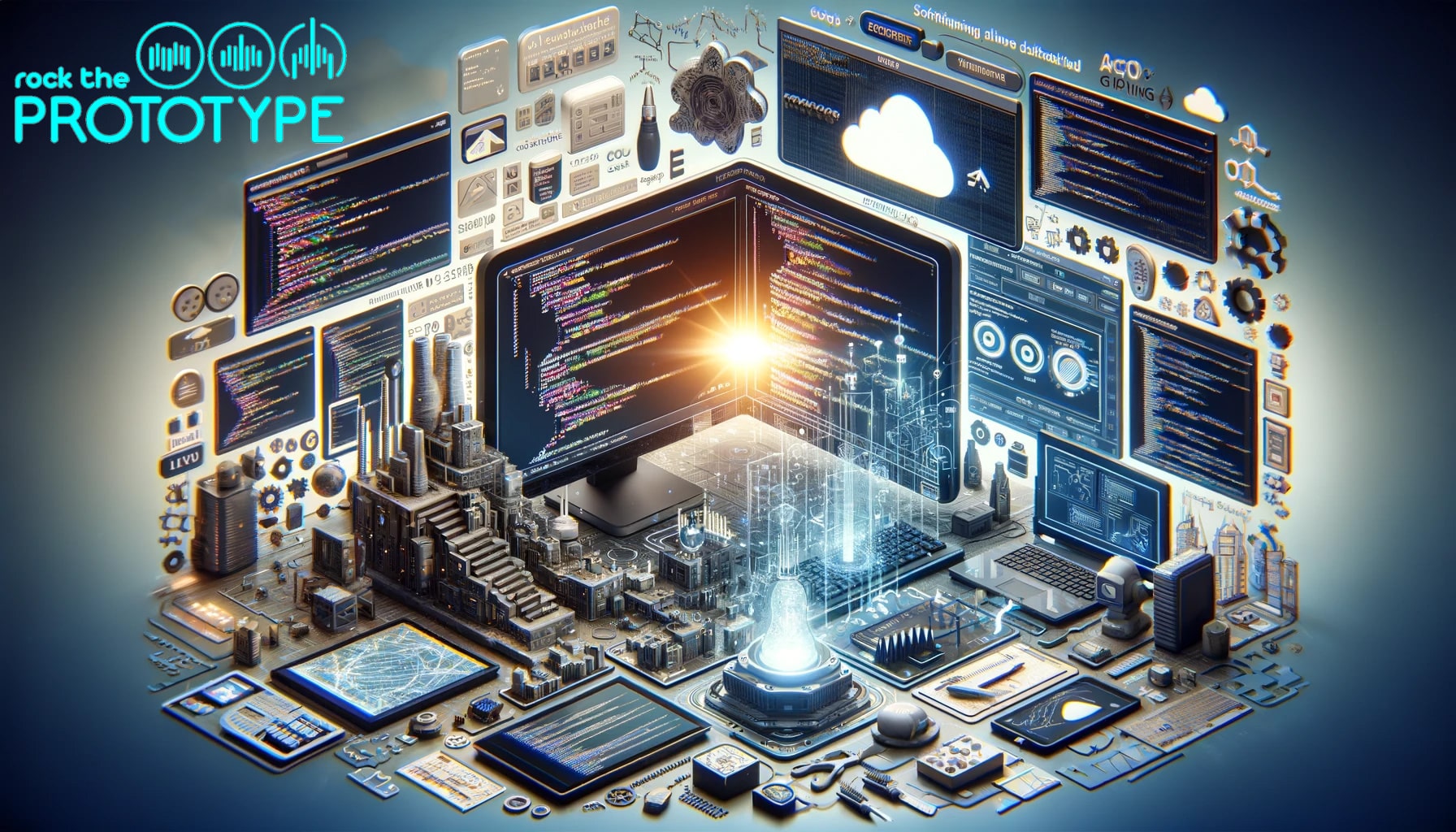
Bootstrapping software – Our image illustrates the process of software initialization and deployment through bootstrapping, which is the transition from code to a functional software component.
Relevance for software developers
Bootstrapping is an indispensable tool for software developers to ensure a consistent and automated setup of their development environments. Bootstrapping techniques allow developers to ensure that all required dependencies and configurations are set up precisely and without manual effort. This saves time and reduces errors that can occur with manual setups.
Importance for DevOps teams
DevOps teams benefit from bootstrapping methods by ensuring efficient and repeatable deployment of applications. By automating the deployment process, teams can quickly and reliably provide software in different environments – from development to production. This supports the principles of continuous integration and deployment (CI/CD), which are central to DevOps cultures.
Advantages for IT professionals
IT professionals see bootstrapping as a way of standardizing the configuration and management of software environments. Especially in large teams or when working with complex systems, bootstrapping enables consistent, error-free and efficient management of the IT infrastructure. This is particularly relevant in the context of cloud technologies and microservices architectures.
Advantages of bootstrapping:
Bootstrapping offers a number of advantages:
- Efficiency: It speeds up the setup and configuration process by using automated scripts and predefined settings.
- Consistency: Using a standardized environment ensures that all developers or teams work with the same tools and settings.
- Maintainability: Updates and changes can be made more easily because the environment and its components are known.
- Error reduction: The chance of making mistakes is minimized as many manual steps are automated by bootstrapping.
Focus on automation and simplification
The key to successful bootstrapping lies in automation and simplification. Tools and scripts that automate the setup and configuration process play a central role here. These tools make it possible to configure and manage complex environments with a minimum of manual intervention. This leads to more efficient development and a faster market launch of software products.
In our rapidly evolving IT landscape, bootstrapping is more than just a tool – it’s a necessity to keep up with the speed and complexity of modern software development and deployment processes.
For software developers, DevOps teams and IT professionals striving for efficient, automated and error-free processes, a sound understanding and application of bootstrapping methods is essential.
Bootstrapping and containerization:
Containerization has revolutionized the concept of bootstrapping. While bootstrapping traditionally referred to the process of initializing and starting a system, containerization enables much more fine-grained and flexible bootstrapping.
By packaging an application and all its dependencies in a single container, developers can ensure that the software environment is consistent and predictable, regardless of where the container is launched. This eliminates many of the traditional challenges of bootstrapping, such as the occurrence of dependency conflicts or environmental differences. In this sense, containers like Docker and Kubernetes can be said to be the modern face of bootstrapping by providing a repeatable, consistent and isolated method of deploying software.
Containerization is a software deployment method in which the application and its dependencies, system libraries, system tools and settings are packaged in a container. This container is then executed wherever the container platform, such as Docker or Kubernetes, is installed. Unlike traditional virtualization methods, containerization is lightweight as it does not require a full VM, while providing isolation and security.

Bootstrapping relevance for design and UX experts – Our image illustrates the transformation of basic design elements into a polished and user-friendly interface and captures the essence of bootstrapping, how processes for design and UX are noticeably facilitated.
Bootstrapping: A guide for UX experts, design specialists, web designers & co
Bootstrapping is a versatile tool to realize appealing design and outstanding user experience. By using bootstrapping techniques and frameworks, these experts can optimize their digital work processes and develop appealing, feature-rich software such as websites that are perfectly tailored to the needs of their user groups.
Bootstrapping for design specialists & UX experts, web designers & co
Experts in design, usability and user experience value bootstrapping as a key strategy for efficient software delivery. Bootstrapping enables them to quickly develop customizable and customer-centric web applications that are critical to the success of digital solutions.
Relevance for web designers: Web designers find bootstrapping a valuable approach for quickly turning design concepts into working prototypes. This method is particularly useful for realizing UI/UX designs efficiently and shortening feedback loops. An understanding of bootstrapping tools and frameworks that are specifically suited to design tasks is essential.
Importance for front-end developers: Front-end developers benefit from bootstrapping because it allows them to quickly convert design into code and ensure a consistent user interface across different projects. Bootstrapping frameworks offer a range of ready-made components that speed up development and make it easier to comply with design standards.
Involvement of UX designers: UX designers can use bootstrapping to create interactive prototypes that simulate real user interactions. This helps to test and optimize the user experience at an early stage, which is very important for the development of user-centric web applications.
Importance for content managers
Content managers appreciate how bootstrapping makes their work easier, especially with regard to content integration in web applications. Bootstrapping methods help to embed your content seamlessly and efficiently into the design and functionality of the website.
Focus on design and user guidance
The design of bootstrapped websites must focus on clear design and intuitive user guidance. This includes optimizing the structure and visual presentation of content in order to improve the user-friendliness and findability of information. UI frameworks play a central role here, as they provide tools for effective and aesthetically pleasing web design.
Bootstrapping tools for almost any application
There are now various bootstrapping tools available, and not just for web applications. Basically, a software developer can also independently define appropriate bootstrapping strategies for each software stack.
The
containerization
enables new ways to use apps and software applications via
container
to make them available. This makes deploying code as infrastructure ever easier, as container-based deployment takes place in a layer that is isolated from the operating system. It is of secondary importance whether applications are
Docker
or
Kubernetes
are deployed, the basic principle is identical.

Top 10 bootstrapping tools for software development
Top 10 most relevant bootstrapping tools
When creating our top 10 list of the most relevant bootstrapping tools for software development, we consider factors such as ease of use, functionality, popularity in the developer community and the versatility of the application. Our list is prioritized so that the tools with the greatest overall relevance and application flexibility are at the top.
- Git: Even though Git is primarily known as a version control system, it plays a crucial role in the bootstrapping process, especially in conjunction with CI/CD tools such as Jenkins.
- Kubernetes: Kubernetes is the leading orchestration tool for containers. It enables the management of containerized applications on a large scale and is often used in combination with Docker.
- Docker: Docker has revolutionized the way applications are containerized and deployed. It provides a lightweight and efficient solution for bootstrapping applications in isolated environments.
- Terraform: Terraform is a very popular infrastructure-as-code tool that enables the automation and management of infrastructures in the cloud. It is particularly useful for extensive, cloud-based applications.
- Ansible: Ansible is a powerful tool for configuration management and automation. It enables developers and system administrators to efficiently automate the configuration of servers and applications.
- Vagrant: Vagrant is particularly useful for creating and managing virtual machines. It enables developers to create consistent and portable working environments.
- Chef: Chef is another powerful tool for configuration management. It enables the writing of “recipes” for the automation and management of the infrastructure.
- Puppet: Puppet is a configuration management tool similar to Chef and Ansible. It enables efficient and automated infrastructure management.
- Jenkins: Jenkins is a leading tool for continuous integration and deployment. It plays a central role in DevOps pipelines and supports a large number of plugins.
- Bootstrap (framework): While the other tools focus on infrastructure and configuration automation, the Bootstrap framework is a front-end tool that helps web developers to create responsive designs quickly and efficiently.
This list is prioritized according to overall relevance for most software development projects and environments. Our selection is based on how widely the tool can be used, its popularity in the developer community and its ability to simplify and automate processes. Each of these tools offers specific benefits that make them a valuable addition to the arsenal of any software developer, DevOps team or IT professional.
Our list can be continued indefinitely and, of course, prioritized in any other order. We recommend that you gradually familiarize yourself with these powerful tools.
History of bootstrapping
A structured presentation of the origin and history of bootstrapping illustrates well the evolution from a simple boot process of a personal computer to a complex, multi-layered approach to the provision and configuration of software in the modern IT world.
- Origins and etymology:
- The term “bootstrap” comes from the English expression “to pull oneself up by one’s bootstraps”, which means to free oneself from a difficult situation without outside help.
- In the context of computers, bootstrapping refers to the start process in which a system is initialized and loaded from the ground up.
- The beginnings – punched cards and tape drives:
- In the early days of computer technology, programs were often loaded manually via punched cards or tape drives.
- Loading the first program into a computer was often referred to as bootstrapping because it started the process of loading additional programs and operating system functions.
- Development of BIOS and UEFI:
- With the introduction of microcomputers in the 1970s and 1980s, the boot process was standardized by the Basic Input/Output System (BIOS).
- Later, in the 21st century, the Unified Extensible Firmware Interface (UEFI) emerged as a modern replacement for the BIOS, offering more flexible and secure boot options.
- Software bootstrapping:
- In the 1990s and 2000s, with the emergence of complex software stacks, the term bootstrapping was also used in the software development context.
- It refers to the process by which a minimal set of software automatically downloads and configures other required software packages and libraries.
- Cloud era and containerization:
- With the rise of cloud technologies and microservices in the 2010s, the bootstrapping of software in container environments became increasingly important.
- Tools like Docker and Kubernetes revolutionized bootstrapping by providing a consistent and isolated environment for software applications that can be easily replicated across different infrastructures.
- Future and further development:
- The ongoing development of Infrastructure as Code (IaC) tools such as Terraform and Ansible makes it possible to automatically bootstrap the entire infrastructure, from networks to applications.
- With the rise of edge computing and IoT devices, bootstrapping will continue to play a crucial role in ensuring consistent software delivery across an ever-increasing variety of devices and platforms.
Our “Rock the Prototype” Wiki: A guide for your IT journey
Hey, welcome to “Rock the Prototype”! You’ve come to the right place if you’re interested in the fascinating world of software development. Our website is a treasure trove of information and resources to help you expand your skills and knowledge in various areas of IT. Let’s navigate together through the topics most relevant to you:
Your guide to navigating the Rock the Prototype Wiki:
- Software Development: This is our centerpiece. Here we dive deep into the concepts of prototyping and bootstrapping. You will learn how to develop software efficiently and which tools and frameworks are essential for this.
- Prototyping: a core topic for us. If you want to learn how to develop prototypes quickly and effectively, you’ve come to the right place. We’ll show you how to turn your ideas into tangible projects.
- Programming languages & frameworks: A must for every developer. We offer you a comprehensive insight into various programming languages and explain how frameworks can make your development work easier.
- Algorithms: Algorithms form the foundation of programming and are crucial for understanding how software solves problems and performs tasks efficiently. Here you will gain insights into basic and advanced algorithms, their application and how they are used in different programming languages.
- Learn programming: From the basics of programming to advanced concepts of programming, we cover a broad spectrum suitable for both beginners and experienced developers. Whether you are taking your first steps in the world of programming or want to deepen your knowledge in specialized areas such as AI and algorithms, we have the right learning materials and guides for you.
- Software architecture: A complex but rewarding field. Understand how a solid IT architecture forms the basis for efficient and scalable software.
- Artificial intelligence: AI is one of the most fascinating and rapidly developing fields in IT. Here we dive into the basics of AI and explore topics such as machine learning, neural networks and data analysis. You will learn how AI technologies are used to develop intelligent solutions that solve problems and enable innovative products. This area is aimed at anyone interested in creating smart, data-driven applications.
- Cloud computing is a revolutionary concept that has changed the way we develop and deploy software. In this section, you will learn how to use cloud technologies to create scalable, flexible and efficient solutions. We cover topics such as cloud service models (IaaS, PaaS, SaaS), cloud storage solutions and the management of cloud services.
- IT infrastructure: The technical infrastructure forms the backbone of every modern software application. In this section, we look at the importance of a robust and well-designed IT infrastructure. You will learn about network concepts, hardware and software components that are essential for the smooth operation of IT systems, and how to build a scalable and secure infrastructure for your projects. This area is particularly relevant for those involved in system administration, network management and supporting software development projects.
- IT security: IT security is a central aspect of designing secure software. This makes this topic an indispensable component so that you can make your contribution to a trustworthy digital world. We inform you about central security aspects and provide you with important information and checklists that you should consider during the development of software.
- Cryptography: A specialized area that is becoming increasingly important. Discover how cryptography is used in software development and why it is crucial for the security of your projects.
- Design: Our Design section provides you with important input around user experience and proven concepts to help you create impressive apps and engaging software.
Our Rock the Prototype podcast is always your reliable source of information, on the go or at home. Whether you’re a newbie or an experienced developer, you’ll always find valuable information and resources to help you expand and deepen your skills.
New concepts, practical tips & tricks to take your projects to the next level. Let’s explore the exciting aspects of software development together and find out how you can make the most of your learning and development journey!
Rock the Prototype provides you with the tools and knowledge to succeed in the world of software development.
We hope that you will quickly find your way around our platform…
Have fun discovering!